Context
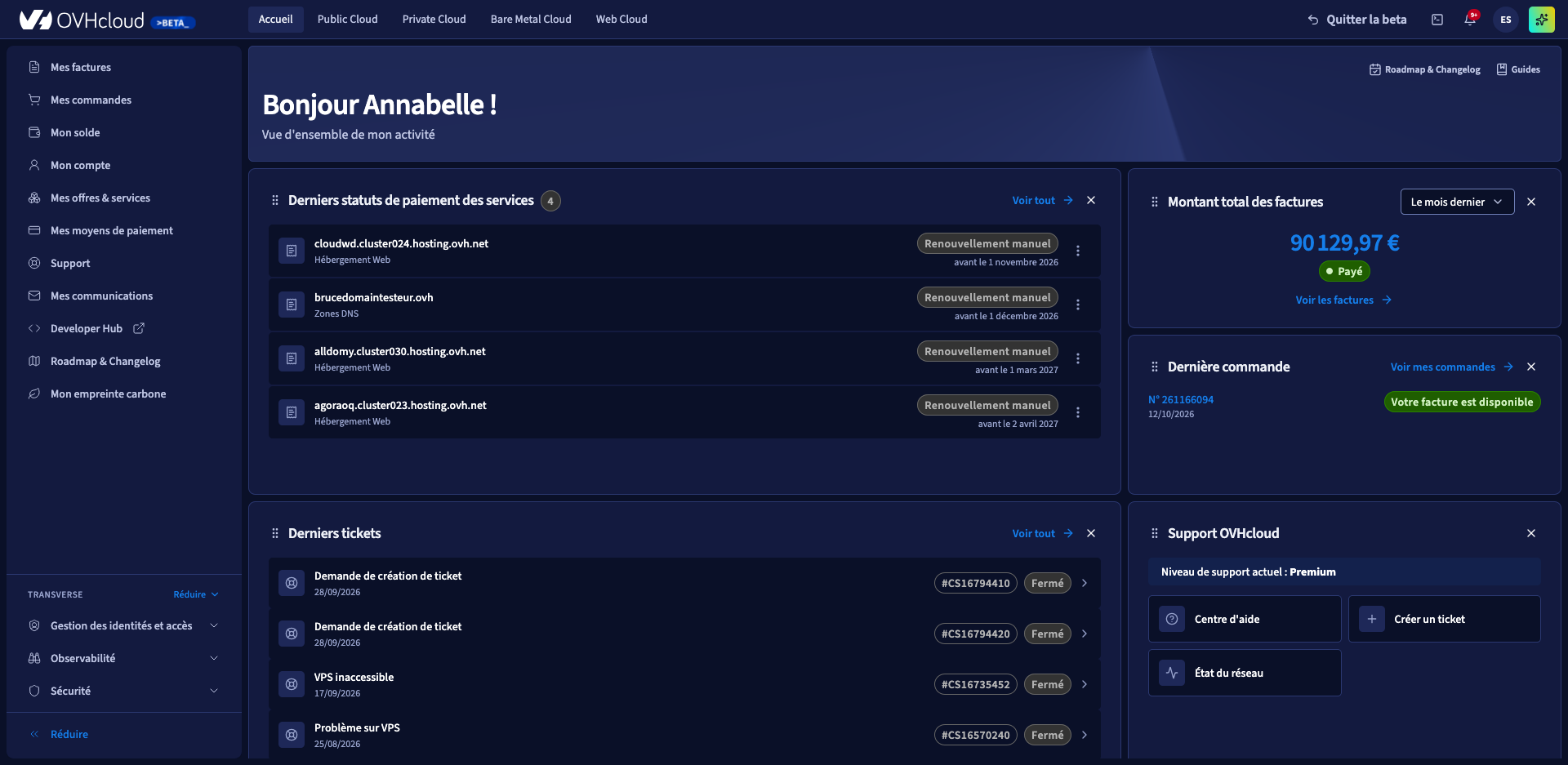
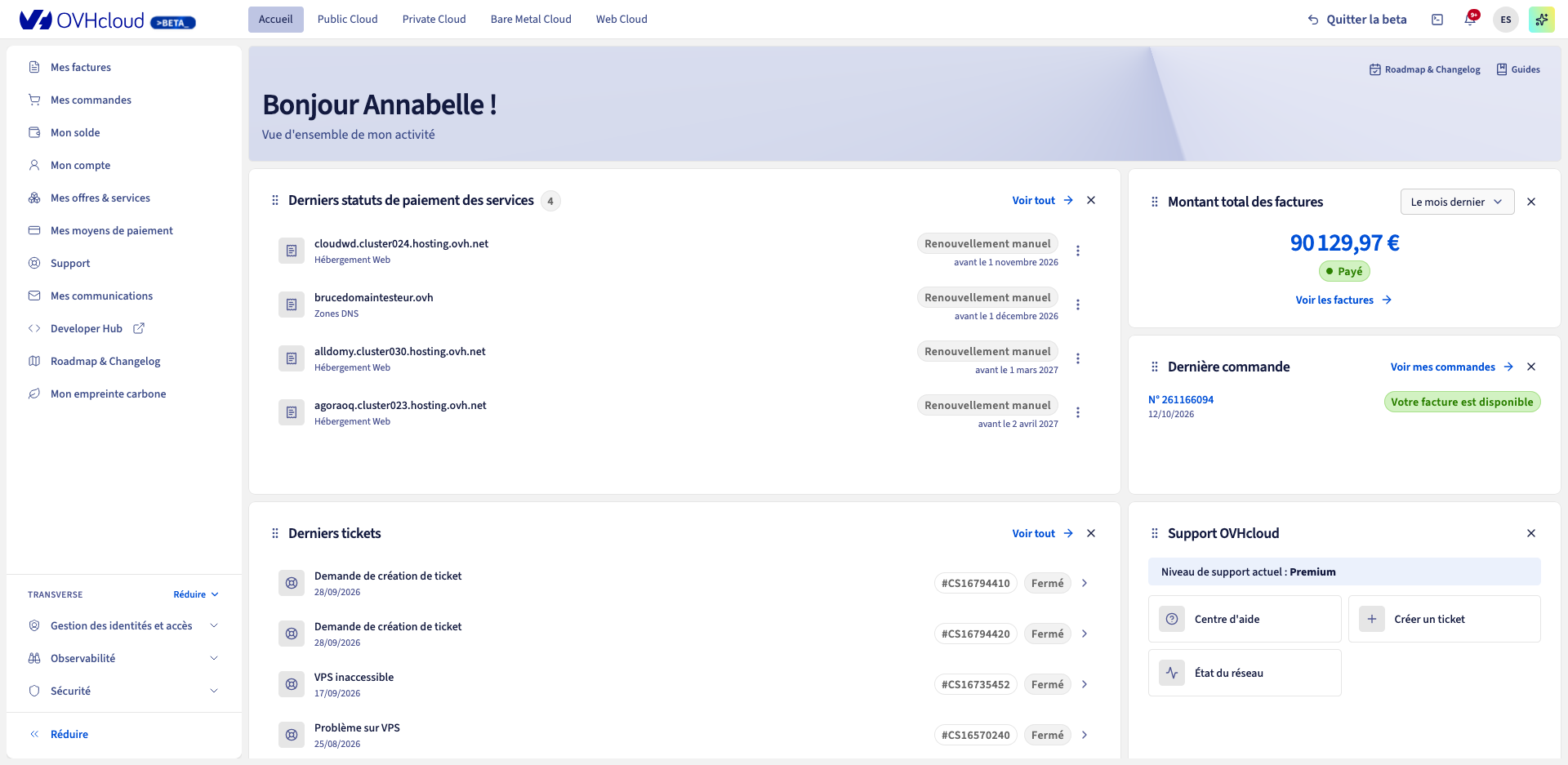
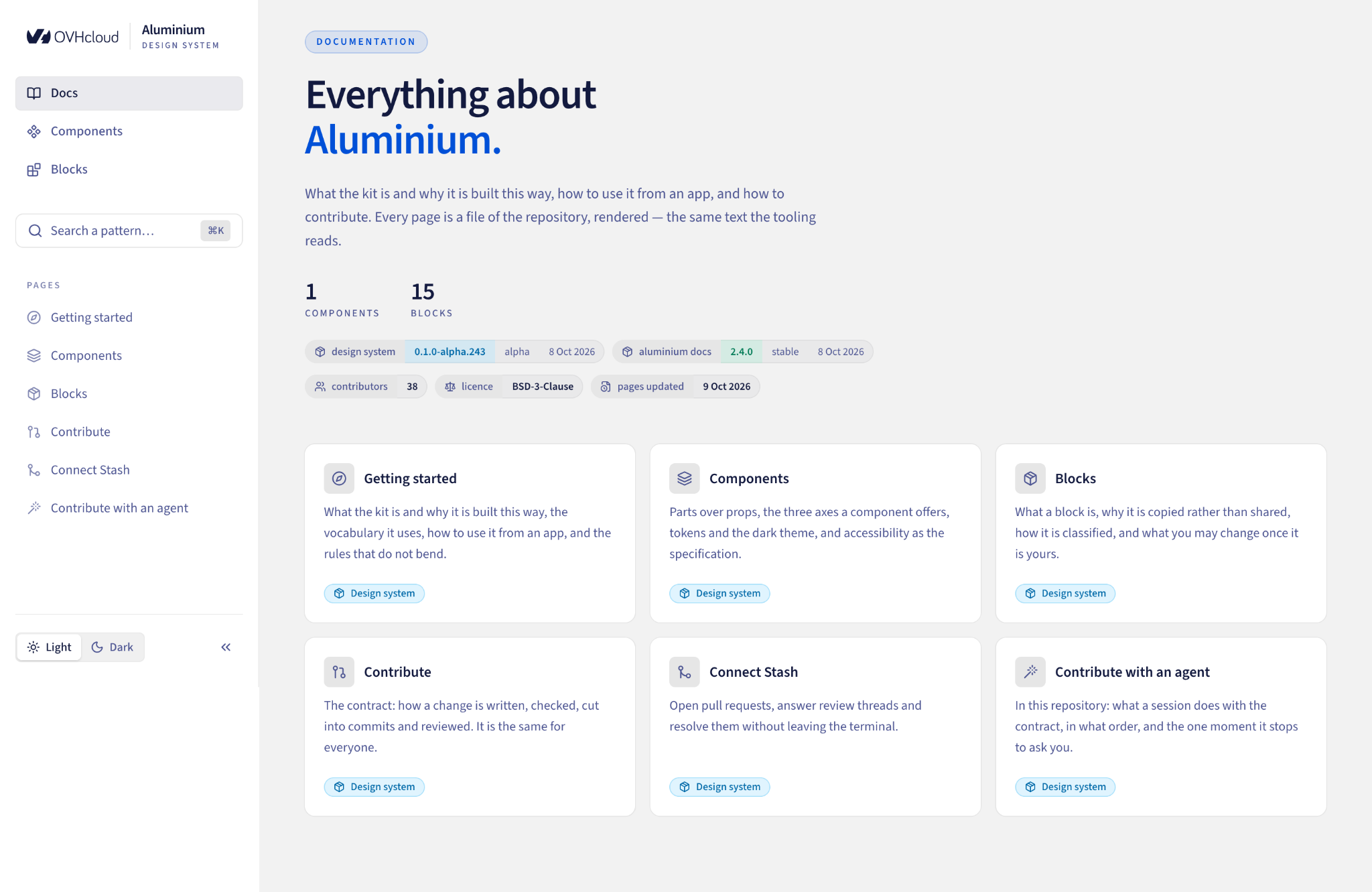
Launched in May 2026, Aluminium is OVHcloud’s new Design System. It supports the complete redesign of the console, previously known as the Manager, with one ambition: a unified experience across all product areas.
The project is part of a broader change in how teams work. OVHcloud wants to adopt an AI-first approach across the organisation. For design, this means rethinking both what we create and how we build it, by contributing directly to the code with AI assistance.
Aluminium is built on a shadcn/ui foundation. The system is new, but this starting point helps us develop an interface language tailored to OVHcloud. The timeline is tight: a May kick-off and a target launch in mid-September 2026.
Key challenges
Unify the experience, respect different uses
The new console brings together product areas with different needs. The challenge is to establish familiar components, interactions and page structures while leaving room for the specifics of each user journey.
Turn shadcn/ui into an OVHcloud system
Starting with shadcn/ui gives the design work a foundation. The next challenge is to shape it into a coherent system for the console: define how elements should be used, adapt the interfaces and combine them to meet product needs.
This goes beyond creating individual components. It means considering how the pieces fit together, from basic interface elements to templates, so teams can build with a shared language.
Move quickly, keep a clear direction
In just a few months, the team needs to establish the system’s foundations while adopting a new way of working. AI-assisted design aims to shorten the path from an idea to a working interface, while maintaining a critical eye on UX consistency and UI quality.
Impact & evolution
From design to code, in one workflow
With Aluminium, design extends into direct code contributions. Vibe coding and AI-assisted design enable designers to work on the interface itself, using Storybook to explore and iterate.
The cycle is hands-on: create a branch, work with AI, examine the result in Storybook, refine it, then open a pull request. Review feedback informs another iteration until the contribution is ready to be integrated.
Storybook as a working environment
Storybook plays a central role in this process, bringing design intentions face to face with working components. Discussions focus on the actual interface, its states and behaviours, in the environment where the system comes to life.
AI as part of design practice
AI is embedded in implementation, beyond exploring ideas. It supports code iterations, while design remains focused on experience decisions, meaningful interactions and overall consistency. Branches, pull requests and reviews become everyday collaboration tools for designers.
Deliverables
In a few months, the team built Aluminium’s foundation on shadcn/ui: 53 components, 34 molecules, 4 organisms and 5 templates.
These levels connect individual interface elements to compositions and page structures. Together, they provide a shared foundation for designing the new console and bringing its product areas into a consistent experience.
Aluminium is both a Design System and a shift in practice: designers working directly in code, iterating with AI and contributing to the product through a workflow shared with development.